 |
WordExplain God's Answers for Man's Questions |
|
|
|
                   |
Introduction
Many Christians, I fear, have
too narrow a view of the meaning of the Greek verb metanoéō (3340).
It is typically translated "repent." They jump to the conclusion that
it always means "repenting of one's sins." But that is not really an
accurate understanding in a number of contexts.
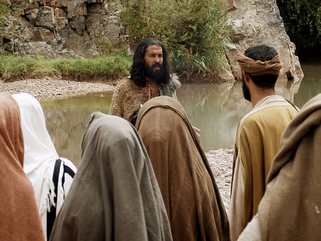
The basic meaning of the word is to "change one's mind." A corresponding change in behavior is implied. The reader must examine the context to see precisely about what the writer or speaker is urging his readers or listeners to change their minds. Sometimes, it is true, he is asking them to change their minds about their sins. But at other times, he is asking them to change their minds about a person, usually the person of Jesus Christ. The following Scriptures include every occurrence of the Greek verb metanoéō (3340). I am in hopes that you, the reader, will work through this material and discover anything about which or any person about whom you yourself need to change your mind! Go here if you desire a quick look at the conclusion. There is a companion article that places each reference used below in a table. The table indicates whether the context is repenting of one's sins, or whether it is repenting of one's false perception of Christ. In some passages, probably both meanings are present. The name of the companion article is "A Biblical Theology of Repentance in Table Format." Matthew 3:2. 1Now in those days John the Baptist came, preaching in the wilderness of Judea, saying, 2“Repent, for the kingdom of heaven is at hand.” John was
commanding the people of Israel continually to be changing their minds
in view
of the fact that the kingdom of the heavens had drawn near to them in a
spatial
sense. Presumably, if the kingdom of the heavens was near his Judean
listeners,
the King of the kingdom was also near. Matthew (Matt. 3:3)
identified John as the one to whom Isaiah the prophet referred in Isaiah
40:3, “The voice of one crying in the wilderness, ‘Make ready
the way of
the LORD, make His paths straight.’” Whether or not John’s listeners
made this
connection is uncertain, but certainly Matthew did. In any event, many
people
in Judea were deeply moved by John’s message, and they were being
baptized by him
in the Jordan River, openly confessing their sins (Matt.
3:6). Changing
their minds (metanoeo) in
preparation
for the kingdom that had approached them from the heavens included
first,
anticipation of the King, second, spiritual cleansing to qualify for
participation in His kingdom. It is worth noting that John perceived
that many
of the Pharisees and Sadducees coming to his baptism were insincere. He
called
them a “brood of vipers,” and wondered who had secretly warned them to
flee
from the coming wrath! He commanded them to bear fruit worthy of a
change of
mind (metanoia, 3341).
[As it
turned out, most of these Pharisees and Sadducees were unregenerate, as
their
subsequent rejection and crucifixion of Jesus demonstrated.] He warned
them not
to reply upon the fact that they were physical descendants of Abraham,
for
judgment was already approaching! (Matt.
3:7-10). Moreover, he warned of One mightier than he who was
coming. The
mightier One would baptize with superior baptisms, that of the Holy
Spirit and
of fire. His Spirit-baptism would place respondents (wheat) in God’s
granary of
salvation, but His fire-baptism would burn rejecters (chaff) with
unquenchable
fire, a tacit reference to gehenna
(hell) (Matt.
3:11-12)! Matthew 4:17. 17From that time Jesus began to preach and say, “Repent, for the kingdom of heaven is at hand.” It should be
observed
that, since giving an account of John’s baptism and preaching at the
Jordan,
Matthew recorded four other note-worthy events: (1) Jesus had also come
to be
baptized by John in order “to fulfill all righteousness.” At the same
time, God
had anointed Him with His Spirit, thus denoting Jesus not only as His
Beloved
Son, but as His Messianic, Davidic King (Matt.
3:13-17). (2) Jesus successfully passed His Spirit-induced
temptation by
Satan during a forty-day fast in the wilderness (Matt.
4:1-11). (3) John had been arrested and was removed from his
preaching
ministry (Matt.
4:12). (4) Jesus left Judea and moved to Galilee (Matt.
4:12-16), settling in Capernaum, by the sea, in the region of
Zebulun and
Naphtali. This, Matthew recorded, was deliberate, and fulfilled the
prophecy of
Isaiah 9:1-2,
in which the prophet had predicted a glorious future for the land of
Zebulun
and Naphtali, near the sea, Galilee of the Gentiles. Isaiah,
interpreted by
Matthew, had accurately predicted the region of Messiah’s ministry
(Matt.
4:12-15) and the impact of Messiah’s ministry – glory (Isa.
9:1) and the dawning of great light for those sitting in
darkness and the
shadow of death (Isa.
9:2; Matt. 4:16). It was from that point and with that
background that
Jesus began to announce and to command, “Have a change of mind, because
the
kingdom of the heavens has drawn near (to you in the Person and
Presence of the
King!) (Matt.
4:17). So
in context, the change of mind Jesus commanded (metanoeo)
had to do with perceiving the glorious dawning of new light for those
who had
previously experienced contempt (Isa.
9:1), and who were presently sitting in darkness and the
shadow of death.
So the change of mind Jesus was promoting covered three factors: (a)
The kingdom
from the heavens had drawn near to them; (b) they should respond
appropriately
to the King (obviously Himself); and (c) His presence heralded and
constituted
the dawn of a great light of life for them, for they were experiencing
death!
It should be noted that, though Jesus would later certainly talk about
sin (see
Matt. 5-7), this initial change of mind does not mention sin. Matthew 11:20-21. 20Then He began to denounce the cities in which most of His miracles were done, because they did not repent. 21“Woe to you, Chorazin! Woe to you, Bethsaida! For if the miracles had occurred in Tyre and Sidon which occurred in you, they would have repented long ago in sackcloth and ashes. Unfortunately, we English speakers are so conditioned to connect sin with the word repent that we assume Jesus condemned Chorazin and Bethsaida because they did not repent of their various sins. But I do not believe that is primarily what Jesus had in mind. Much time has elapsed during Jesus’ ministry as recorded in Matt. 4-11. It is true that Jesus certainly emphasized the appropriate behavior necessary to participate in the kingdom of the heavens (Matt. 5-7). But Matthew summarized Jesus’ ministry in brief statements such as those found in Matthew 4:22-25; 8:16-17; 9:35-38; 10:1-8; 11:1; 11:2-6. It is clear that through His ministry, Jesus was searching for those who would recognize Him as the Messiah He was, accepting Him by faith. Most egregious in their rejection of Him were the Pharisees and other leaders, who not only rejected Him as the Messiah, but stated that He cast out demons by the power of Satan (Matt. 9:34; 10:25; 12:22-32). It would appear that Jesus pronounced woe upon Chorazin and Bethsaida because, despite all the miracles performed among them, they still did not believe He was the Messiah! From this they needed to change their mind. Had Jesus performed these miracles in the Gentile cities of Tyre and Sidon, they would have changed their mind about him in sackcloth and ashes long ago. In other words, the people of the Gentile cities would have been appalled at their neglect of Jesus and would have placed their confidence in Him as the King! Matthew 12:41. 41“The men of Nineveh will stand up with this generation at the judgment, and will condemn it because they repented at the preaching of Jonah; and behold, something greater than Jonah is here." A superficial assessment might lead one to conclude that metanoeo has to do with a change of mind about evil. And a good case can be made for that conclusion. When Jonah had cried out that the city of Nineveh would be overthrown in forty days, the king of Nineveh issued a proclamation that included the following words, 8“But both man and beast must be covered with sackcloth; and let men call on God earnestly that each may turn from his wicked way and from the violence which is in his hands. 9Who knows, God may turn and relent and withdraw His burning anger so that we will not perish” (Jonah 3:8-9). But that is not
the end of the story, either in the
book of Jonah
or in the gospel of Matthew. After Jonah cried out, “Yet forty days and
Nineveh
will be overthrown” (Jonah
3:4), the text reads immediately, 5““Then
the people
of Nineveh believed in God; and they called a fast and put on sackcloth
from
the greatest to the least of them” (Jonah
3:5). So we can conclude two things from the account
in Jonah: (1) The
people changed their minds about continuing in their “evil way” and
“violence”
because they believed in God. (2) The people changed their minds about
their
“evil way” and “violence” because they believed in Jonah. Let’s see if
anything
of the kind exists in Matt.
12. In
the extended context of Matt.
12, (a) “the Pharisees” accused Jesus’ disciples of breaking
the Sabbath by
picking heads of grain, shelling them by hand, and then eating them as
they
passed through a field (Matt.
12:1-8). (b) Jesus left and entered their synagogue,
apparently on the
Sabbath. Jesus healed a man with a withered hand there on the
Sabbath. But
the Pharisees left, seeking a way to kill Jesus (Matt.
12:9-14). (c) Subsequently, Jesus healed a demon-possessed man who was
blind and mute (Matt. 12:22). The
amazed crowds were all but willing to assign to Jesus Messianic status.
Unable
to deny the factuality of the miraculous sign, the Pharisees, however,
completely distorted the miracle. They asserted, apparently not in
Jesus’ presence,
that he was able to cast out demons only by the power of Beelzebul, the
ruler
of the demons. Jesus, aware of their thoughts, pointed out the
absurdity of
their illogic, and then concluded that they had committed the
unpardonable
sin by attributing Jesus’ power source to the devil instead of to the
Holy
Spirit (Matt.
12:22-32). They would be judged by their words (Matt.
12:33-37). Unbelievably,
some of the scribes and Pharisees then requested a sign from Jesus! The
immediate
context of Matthew
12:41 reads as follows (Matt.
12:38-42): 38Then some of the
scribes and Pharisees
said to Him, “Teacher, we want to see a sign from You.” 39But
He
answered and said to them, “An evil and adulterous generation
craves for a
sign; and yet no sign will be given to it
but the sign of Jonah the
prophet; 40for just as Jonah
was three days and three
nights in the belly of the sea monster, so will the Son of Man be three
days
and three nights in the heart of the earth. 41“The
men of
Nineveh will stand up with this generation at the judgment, and will
condemn it
because they repented at the preaching of Jonah; and behold, something
greater
than Jonah is here. 42“The
Queen of the
South will rise up with this generation at the judgment and will
condemn it,
because she came from the ends of the earth to hear the wisdom of
Solomon; and
behold, something greater than Solomon is here. The scribes and Pharisees were requesting a miraculous sign presumably sufficient enough to induce them to believe in Jesus as their Messiah. But in view of their complete rejection of Him, Jesus refused any signs for “an evil and adulterous generation” except for the sign of His burial and subsequent resurrection – which He called the sign of the prophet Jonah. The people of Nineveh had changed their mind about God and Jonah, and had believed both, responding by changing their mind and behavior about their sins. The Queen of the South came from afar because she gave credence to the wisdom of Solomon. But both the people of Nineveh and the Queen of the South would stand in judgment upon Israel and her leaders because someone far greater than either Jonah or Solomon had come, but they had not believed He was the Messiah! They had totally rejected Him, (and in fact, would conspire to crucify Him)! So though in a narrower context, the change of mind of the people of Nineveh incorporated a change of mind about sin, the larger context was about faith in the prophet and faith in God. Jesus implied that the people of Israel needed to change their mind. About what? About Him! They needed to trust in Him – to acknowledge Him as their Messiah. This they were, for the most part, totally unwilling to do.Mark 1:15. 14 Now after John had been taken into custody, Jesus came into Galilee, preaching the gospel of God, 15 and saying, "The time is fulfilled, and the kingdom of God is at hand; repent and believe in the gospel." (Mark 1:14-15) There are several things worth noting about the beginning paragraphs of Mark's narrative of the Good News. (1) He began his account, "The beginning of the Good News (Genitive Neuter Singular of the noun euaggélion, 2098) of Jesus Christ [Son of God]" (Mark 1:1, JTB translation, following UBS4 text). (2) Mark quoted both from Malachi 3:1 and Isaiah 40:3 to demonstrate that John the Baptist was the prophesied messenger who would prepare the way for the Messiah (Mark 1:2-3). (3) John, the one baptizing, came into the wilderness and was announcing a baptism of "change of mind" (metánoia, 3341) for the purpose of symbolizing the forgiveness of sins (hamartía, 266) (Mark 1:4). (4) People from Judea and Jerusalem were going out to him confessing their sins (hamartía, 266) (Mark 1:5). (5) After John had been arrested, Jesus came into Galilee announcing the Good News of God (Mark 1:14), and saying that the time has been fulfilled and the kingdom of God has drawn near (chronologically and spatially, in the presence of the Divinely-anointed King). He said, "Be changing your mind (2nd Person Plural Present Active Imperative of the verb metanoéō, 3340), and be believing in the Good News!" (Dative Neuter Singular of the noun euaggélion, 2098) (Mark 1:15, author's literal translation). This same message would be preached again by the twelve Apostles in Mark 6:12, albeit in abbreviated format. Conclusions: (1) Without a doubt repenting (changing one's mind) in these opening paragraphs of Mark's narrative includes confessing one's sins and being forgiven for one's sins. (2) Baptism was designed to symbolize a change of mind about sins and an identification with the coming One who would baptize with the Spirit, a far mightier agent than mere water (Mark 1:7-8). Baptism in water could not induce repentance any more than circumcision could automatically secure a circumcised heart under the Old Covenant. (3) A change of mind about one's sins is necessary (Mark 1:15), but insufficient. It is necessary also to be believing in the Good News (Mark 1:15) from God (Mark 1:14) about Jesus the Messiah, the Son of God (Mark 1:1). Mark 6:12. They went out and preached that men should repent. "And having gone forth, they announced that they should be changing their minds" (author's literal translation.) This is the second and final time that the verb metanoeo (3340) is used in Mark's Gospel. The first time was in Mark 1:15. The comparable noun metánoia (3341) is used but once, in Mark 1:4. In Mark 6:12, the author did not report what it was about which the twelve Apostles' audiences were to be changing their minds. We can only speculate that this mission would correspond with the initial account of Jesus' own mission as recorded in Mark 1:14-15. There it was reported, "After John had been delivered up, Jesus went into Galilee, announcing the good news of God, and saying, 'The time has been fulfilled, and the kingdom of God has drawn near. Be changing your minds, and be believing in the Good News'" (author's literal translation). So I conclude, lacking any greater specificity in Mark 6:12, that the Twelve were proclaiming that men should be changing their minds about their sins in preparation for the coming kingdom of Jesus. An appropriate response would include changing one's mind about sin and also believing in the Good News about the coming Kingdom, of which Jesus was to be the King. In fairness, Mark, in his brevity, does not here specify the latter element of faith, but from the beginning, that was Jesus' emphasis. It is difficult to presume that that element would have been omitted from their preaching missions. Luke 10:13. Woe to you, Chorazin! Woe to you, Bethsaida! For if the miracles had been performed in Tyre and Sidon which occurred in you, they would have repented long ago, sitting in sackcloth and ashes. In Luke 10:1, Jesus sent forth an advance team of seventy others to prepare the people in the cities for His ensuing visit. They were to heal the sick and to announce, "The kingdom of God has drawn near to you" (Luke 10:9). In whatever city that rejected them they were to wipe the dust off their feet in protest and assert to them that the kingdom of God had indeed drawn near to them (Luke 10:10-11). Jesus told them it would be more tolerable in the day of judgment for Sodom than it would be for that city (Luke 10:12). Then Jesus pronounced woe upon Chorazin and Bethsaida. If the miracles performed in those cities had been performed in Tyre and Sidon, they would have changed their minds long ago, sitting in sackcloth and ashes (Luke 10:13). In the context then, "repenting" has to do here with changing one's mind, on the basis of Jesus' many miracles, about whether or not He were truly the Messiah, the King of the "near at hand" kingdom of God (Luke 10:9-11). Of course that would have included a change of mind about their own personal sins also, in preparation for that kingdom. But the emphasis in this passage is upon accepting the message about the nearness of the kingdom of God in terms of the King, Jesus, who would soon visit them, and, as well, about His representatives, the seventy, who would visit them first. Luke 11:32. The men of Nineveh will stand up with this generation at the judgment and condemn it, because they repented at the preaching of Jonah; and behold, something greater than Jonah is here. In Luke 11:14 Jesus cast out a demon that caused muteness from a man. After that, the man spoke, and the crowds were amazed. Some bystanders accused Jesus of casting out demons by the power of Beezebul (Luke 11:15). Others, testing Him, were seeking from Him a sign from heaven (Luke 11:16). The crowds were increasing, and He began to say, "This generation is an evil generation. It seeks a sign, and no sign shall be given it except the sign of Jonah" (Luke 11:29). Just as Jonah was a sign to the people of Nineveh, so shall the Son of man be a sign to this generation (Luke 11:30). The Queen of Sheba will rise up with the men of this generation at the judgment, and condemn them, because she came from the ends of the earth to hear the wisdom of Solomon; and behold, something greater than Solomon is here (Luke 11:31) The men of Nineveh will stand up with this generation at the judgment and condemn it, because they repented at the preaching of Jonah; and behold, something greater than Jonah is here" (Luke 11:32). The men of Nineveh believed what Jonah said (Jonah 3:4), believed in God (Jonah 3:5), and repented of their sins to avert God's judgment (Jonah 3:5-9). This generation, that is, the nation of Israel as a whole, did not believe that Jesus was their Messiah, they did not believe what Jesus said, and they did not repent of their sins to be able to participate in His kingdom. The fundamental issue was that they did not change their minds about who Jesus was, and thus they did not change their minds about the evil they were committing. Luke 13:3. 1 Now on the same occasion there were some present who reported to Him about the Galileans whose blood Pilate had mixed with their sacrifices. 2 And Jesus said to them, "Do you suppose that these Galileans were greater sinners (hamartōlós, 268) than all other Galileans because they suffered this fate? 3 "I tell you, no, but unless you repent, you will all likewise perish" (apóllumi, 622, be destroyed) (Luke 13:1-3). Here, obviously, repenting is tied in with changing one's mind about sinning. Luke 13:5. 4 "Or do you suppose that those eighteen on whom the tower in Siloam fell and killed them were worse culprits (opheilétês, 3781) than all the men who live in Jerusalem? 5 "I tell you, no, but unless you repent, you will all likewise perish (apóllumi, 622, be destroyed)" (Luke 13:4-5). Once again, repenting is tied in with sin. Luke 15:7. "I tell you that in the same way, there will be more joy in heaven over one sinner (hamartōlós, 268) who repents than over ninety-nine righteous persons who need no repentance (metánoia, 3341)." Once again, repenting is tied in with sin and being a sinner (Luke 15:1-2, 7, 10). Luke 15:10. "In the same way, I tell you, there is joy in the presence of the angels of God over one sinner who repents." Again, repenting is connected with sin and being a sinner (Luke 15:1-2, 7, 10). Luke 16:30. "But he said, 'No, father Abraham, but if someone goes to them from the dead, they will repent!' Jesus had been teaching His disciples to use money to influence people into the kingdom (Luke 16:1-9). He also taught they needed to be faithful in their use of wealth, using it to serve God. He warned them that it is impossible to serve both God and wealth (Luke 16:10-13). The Pharisees, who loved money, scoffed at Him (Luke 16:14). Jesus commented that the Law and the Prophets had been being proclaimed until the time of John the Immerser. Since that time, the kingdom of God is being "good-news-icized" and everyone is forcing his way into it (Luke 16:16). That included the Pharisees, but Jesus implied that one cannot break the Law and hope to enter (Luke 16:17-18). Jesus proceeded to tell a parable (Luke 16:19-31) (though it was never called that) about a rich man and Lazarus. The rich man lived comfortably in his life, but ignored the beggar Lazarus at his gate (Luke 16:19-21). Both died. The rich man was in agony in Hades, while Lazarus was in comfort with Abraham. Neither Abraham nor Lazarus were able to provide any physical comfort to the tormented rich man (Luke 16:22-26). Finally he asked Abraham to send Lazarus to his five brothers to warn them so they would not make the same mistake about serving money as he had, and avoid the place of torment (Luke 16:27-28). Abraham said, "Let them listen to and obey Moses and the Prophets!" (Luke 16:29). The rich man replied, "If someone goes to them from the dead, they will change their mind (metanoéō, 3340) (Luke 16:30). Obviously, the rich man wanted his brothers to change their mind about the unimportance of wealth compared to the importance of having a heart to follow God and keep His laws. Abraham's reply was crushing: If they don't listen to Moses and the Prophets, they will not listen to someone who rises from the dead to warn them! (Luke 16:31). Obviously, the Pharisees, who were lovers of money, were the target of this parabolic warning from Jesus. They would not and did not change their minds. They ended up gladly putting the King to death. They had no hope of entering the kingdom, though they assumed their entrance was inevitable. In this passage, "repent" has to do with changing one's life-style and heart attitude in regard to wealth and in regard to God. One cannot serve both! (Luke 16:13) Luke 17:3-4. 3 "Be on your guard! If your brother sins, rebuke him; and if he repents, forgive him. 4 "And if he sins against you seven times a day, and returns to you seven times, saying, 'I repent,' forgive him." This saying of Jesus' comes right on the heels of His warning the Pharisees, who were lovers of money (Luke 16:14), that they needed to repent (change their mind and their behavior) about their obsession with wealth and their refusal to follow Moses and the Prophets (Luke 16:15-31). In fact, they needed a heart transplant (Luke 16:15). Having lectured the Pharisees (Luke 16:14, 15), Jesus turned next to His disciples (Luke 17:1). The coordinating conjunction dé (1161), untranslated in the NASB text, links what was said earlier with what Jesus now said to His own disciples. I give here my own translation of Luke 17:1-4: He
said, moreover, to His disciples, "It is impossible for stumbling
blocks (skándolon,
4625)
not to come, but woe to him through whom they come. It would be
better for him if a mill stone were hanging around his neck and he were
thrown into the sea in order that he might not cause one of these
little ones to stumble. Watch out for yourselves. If your brother sins,
reprove him; and if he repents, forgive him. And if he sins against you
seven times a day, and seven times he returns to you, saying, 'I
repent,' forgive him."
In the broader context, the Pharisees, by their obsession with wealth
and their refusal to obey the Law (Luke 16:1-18), were a stumbling
block (skándolon, 4625).
But even to His own disciples, Jesus warned that stumbling blocks were
inevitable (Luke 17:1). Death by drowning would be preferable than the
consequences of causing someone young in the faith ("little one") to
stumble (skandalídzō,
4624)
(Luke 17:2).
Consequently, they were to watch out for themselves! If your brother sins (hamartánō, 264), and presumably is a potential stumbling block, "[You (singular) are to] rebuke him!" And if he repents (metanoéō, 3340), "[you (singular) are to] forgive him!" (Luke 17:3,4). In this context, repenting is tied in with changing one's mind and one's actions about whatever sin he has been committing. Acts 2:38. Peter said to them, "Repent, and each of you be baptized in the name of Jesus Christ for the forgiveness of your sins; and you will receive the gift of the Holy Spirit. The context of this passage is the Day of Pentecost. This chapter records the fulfillment of Jesus' promise to send the Holy Spirit (Acts 2:1-13). The Holy Spirit came upon the gathered disciples with unusual phenomena, the most outstanding of which was their speaking in unlearned languages (Acts 2:1-4). The Jewish crowd who suddenly gathered were amazed because they were each hearing in their own dialect (Acts 2:5-13). Peter began to explain the foreign language phenomenon (Acts 2:14-36). He first of all identified the tongues-speaking as a (partial) fulfillment of Joel's prophecy of the pouring out of the Holy Spirit with potential salvation (Acts 2:14-21). He further identified the tongues-speaking as proof that God had made Jesus (whom they had murdered) both Lord and Christ! (Acts 2:22-36). The listeners were utterly dismayed! They asked Peter and the other apostles, "Brothers, what shall we do?" (Acts 2:37). Peter replied, "Change your (plural) mind, and let each of you be immersed (singular) into the name of Jesus Christ for forgiveness of your (plural) sins, and you (plural) will receive the gift of the Holy Spirit" (Acts 2:38, author's translation). About what, or concerning whom did Peter exhort the crowd of Israelis to change their minds? Quite obviously, it was about Jesus! Their nation had condemned Him to death, but the descent of the Holy Spirit was proof that God had made Jesus both Lord and Christ (Messiah)! Being immersed was not causing baptismal regeneration, but was rather signifying a whole-hearted identification with Jesus as the Messiah of Israel. All of the listeners were familiar with proselyte immersion of Gentiles in the baths surrounding the temple to identify with Judaism. Now Peter was asking them to be immersed in water to show publicly they had changed their minds about who Jesus was, and were willing to identify with Him as their Messiah formally and publicly. And Peter was saying that to identify with Jesus would result in the forgiveness of their sins, the greatest of which was their corporate execution of their own Messiah! He kept exhorting them to be saved from this crooked generation (Acts 2:40), referring to the nation of Israel. Failure to change their minds about Jesus and identify publicly with Him would result in their being judged terribly for their rejection of their own Messiah. This came about in a literal and terrible way when God judged Judah and Jerusalem by means of the vicious Roman Army, who imprisoned many Israelis inside Jerusalem and ruthlessly slaughtered perhaps a million of them in A.D. 70. The result was that, "As many, therefore, having welcomed his message were immersed; and there were added in that day about three thousand souls" (Acts 2:41, author's translation). In other words, they changed their mind about who Jesus was, desiring their sins to be forgiven. And they were publicly immersed as token of their identification with Jesus, their Messiah. Acts 3:19. 17 "And now, brethren, I know that you acted in ignorance, just as your rulers did also. 18 "But the things which God announced beforehand by the mouth of all the prophets, that His Christ would suffer, He has thus fulfilled. 19 "Therefore repent and return, so that your sins may be wiped away, in order that times of refreshing may come from the presence of the Lord; 20 and that He may send Jesus, the Christ appointed for you, 21 whom heaven must receive until the period of restoration of all things about which God spoke by the mouth of His holy prophets from ancient time. (Acts 3:17-21) Peter and John had gone up to the temple to pray (Acts 3:1). They encountered a lame man at the Beautiful Gate asking for charity (Acts 3:2-3). Instead of giving him money, Peter healed him in the name of Jesus Christ (Acts 3:4-7). The man began leaping and praising God, and an amazed crowd began to gather (Acts 3:8-11). Instantly, Peter began preaching his second sermon! (Acts 3:12-26) Peter insisted it was not by their own power that he and John had made this man walk (Acts 3:12). It was rather because God had glorified His servant (paîs, 3816) Jesus, whom they had disowned and had put to death (Acts 3:13-15). They had killed the Prince of life, but God had raised Him from the dead (Acts 3:15), and it was on the basis of faith in the name of Jesus that this man had been healed (Acts 3:16). Peter conceded that they and their leaders had acted ignorantly (Acts 3:17), but God had fulfilled what He had predicted through the prophets, that the Messiah had to suffer (Acts 3:18). Peter then urged the crowd to change their minds about who Jesus was and turn around to God. They needed to admit that Jesus was, indeed, their Messiah, and if they did so, their sin of murder would be forgiven along with their many other sins (Acts 3:19). If they did so, times of refreshing would come from the face of the Lord for the people of Israel (Acts 3:19). This would come in connection with God's sending Jesus, Israel's appointed Messiah, back to earth for the Messianic kingdom (Acts 3:20). But for now, heaven had received Jesus until times of restoration of all things for the nation would come about (Acts 3:21). Meanwhile all the prophets from Moses to Samuel and onwards had spoken of these present days (Acts 3:22-25), in which God had raised up His Servant (paîs, 3816) to bless his Israeli audience by turning each of them from their wicked ways (Acts 3:26). The result was twofold: (1) the priests, captain of the temple guard, and the Sadducees came and arrested Peter and John for proclaiming in Jesus the resurrection of the dead (Acts 4:1-3). (2) Meanwhile about five thousand Israeli men who had heard Peter's messaged believed! (Acts 4:4). We conclude then, that in this passage, repenting meant specifically to change one's mind about who Jesus was. In addition to that, the connotation of changing one's mind in regard to various other sins and wicked ways cannot be excluded (Acts 3:19, 26). Acts 8:22. "Therefore repent of this wickedness of yours, and pray the Lord that, if possible, the intention of your heart may be forgiven you. Pursuant to the great persecution launched upon the church in Jerusalem (Acts 8:1-3) after Stephen's murder (Acts 7:54-60), Philip left for Samaria and began proclaiming Jesus as the Messiah (Acts 8:4-5). God confirmed his message and ministry with many miracles (Acts 8:6-8). Many Samaritans believed Philip's good news about the kingdom of God and the name of Jesus Christ, and they were being immersed (Acts 8:12). Among them was Simon, who used to practice magic in the city (Acts 8:9-11). He was amazed at the miraculous signs and acts of great power taking place (Acts 8:13). Peter and John were sent to Samaria, and they prayed for them that they might receive the gift of the Spirit. They laid hands on them and they were receiving the Holy Spirit (Acts 8:14-17). Simon offered them money so that he also might impart the gift of the Spirit (Acts 8:18-19). Peter was horrified! He told Simon, "May your silver perish with you because you thought you could obtain the gift of God with money!" (Acts 8:20). "You have no part or portion in this matter [of giving the gift of the Spirit], for your heart is not right before God" (Acts 8:21). "Therefore change your mind from this evil of yours, and ask the Lord if, accordingly, the thought of your heart might be forgiven you, for I see you are existing in the gall of bitterness and chain of unrighteousness" (Acts 8:22-23, author's translation). We see, then, that in this particular passage, repenting meant changing one's mind about a specific sin. Peter's admonition seems to have had a proper effect upon Simon (Acts 8:24). Acts 17:30. "Therefore having overlooked the times of ignorance, God is now declaring to men that all people everywhere should repent, (Acts 17:30). Acts 17:15-34 narrates Paul's ministry in Athens. Having arrived in Athens, and while waiting for Silas and Timothy (Acts 17:15-16), Paul began reasoning in the synagogue and in the marketplace (Acts 17:17). Some Epicurean and Stoic philosophers were intrigued with Paul's "idle babbling" about strange demons (daimónion, 1140). They said this because Paul kept talking about the good news (euaggelídzō, 2097) of Jesus and the resurrection (Acts 17:18). They invited him to speak at Mars Hill (Acts 17:19-21). Paul commented on their attention to religion (Acts 17:22), and mentioned his having observed on an altar the inscription, "To an Unknown God." He wished to speak to them about this "Unknown God" (Acts 17:23). He is Creator and Master of all (Acts 17:24). He is Transcendent, because He does not live in man-made temples (Acts 17:24), because He is beyond human service, and because He has no man-like needs, since it is He who gives to all people life and breath and everything (Acts 17:25). God is Sovereign over nations, times, and borders (Acts 17:26). God is Gregarious, hoping men would seek Him and find Him (Acts 17:27). God is Approachable, for He is not far from each of us, and in Him we live, move, and exist, as even some of their own poets have hinted (Acts 17:27, 28). Paul described, in negative terms, God's Nature: It is not material, and not man-made (Acts 17:29). Rather, God is definitively Moral (Acts 17:30-31). He has been historically tolerant of man's ignorance (Acts 17:30); but He is now presently communicating to all men everywhere their collective need to change their mind (Acts 17:30). He is a God who requires Accountability, because He has reserved a date in which He will inevitably judge the inhabited earth in righteousness (Acts 17:31). Moreover, God is Fair, because He will judge all by means of a man whom He has appointed, having secured believability for all, having resurrected Him from among the dead! (Acts 17:31). We conclude then, that when Paul spoke of mankind's collective need to change their mind, he had at least four areas that he was referencing on behalf of his Athenian audience. (1) They needed to change their mind about who God is. (2) They needed to change their mind about God's message He is presently communicating to all. (3) They needed to change their mind about their unrighteousness, because the inhabited earth will be judged in righteousness. (4) They needed to change their mind about God's appointed judge who has been resurrected. It was, by the way, this last point that proved to be a huge stumbling block to much of his audience (Acts 17:32). Some, however, were at least curious (Acts 17:32). Providentially, a few obviously changed their minds and believed Paul and his message (Acts 17:34). Acts 26:20. 19 "So, King Agrippa, I did not prove disobedient to the heavenly vision, 20 but kept declaring both to those of Damascus first, and also at Jerusalem and then throughout all the region of Judea, and even to the Gentiles, that they should repent and turn to God, performing deeds appropriate to repentance. (Acts 26:19-20) Acts 26 records Paul's defense of himself before King Agrippa. He acknowledged Agrippa's expertise in Israeli matters (Acts 26:1-3). He gave his own Jewish background including his existence as a Pharisee (Acts 26:4-5). He stated that he was, ironically, on trial for affirming the Jewish hope in the resurrection (Acts 26:6-8). Then he described his former hostility against Jesus of Nazareth (Acts 26:9-12). He persecuted the saints in Jerusalem (Acts 26:10-11) and in foreign cities (Acts 26:11-12). En route to Damascus, he had a personal encounter with Jesus (Acts 26:13-15). He was staggered by a blinding light from heaven (Acts 26:13-14). Then a voice asked him in the Hebrew dialect, "Saul, why are you persecuting Me?" (Acts 26:14). When Saul asked him who He was, He identified Himself as Jesus, whom Saul was persecuting (Acts 26:15). Paul then related His commissioning from Jesus (Acts 26:16-18). Jesus was appointing him to be His assistant and witness (Acts 26:16). Jesus would preserve him from antagonistic Israelis and Gentiles (Acts 26:17), sending Saul to open their eyes so they might turn from darkness to light and from the dominion of Satan to God, receiving forgiveness of sins, along with an inheritance among those who have been set apart by virtue of their faith in Him (Acts 26:18). Paul then declared to Agrippa that he had not disobeyed the heavenly vision, declaring to both Jewish and Gentile peoples their need to change their minds (Acts 26:19-20). They should change their minds (metanoéō, 3340) and turn to God, performing deeds appropriate to their change of mind (metánoia, 3341) (Acts 26:20). Paul's dilemma was that he was standing trial for declaring only what the Scriptures said would happen – that Christ would suffer and rise from the dead, bringing light to both Jewish and Gentile people (Acts 26:21-23). In response, Governor Festus accused Paul of insanity (Acts 26:24). Paul asserted his own sobriety, stating that he spoke only the truth (Acts 26:25-26). Then Paul asked King Agrippa if he believed the prophets (Acts 26:27). Agrippa deflected Paul's question by suggesting that Paul could not, in such a short time, convince him to become a Christian (Acts 26:28). Paul responded by wishing that all who heard him would share his own outlook, with the exception of his chains (Acts 26:29). In private conference, King Agrippa, Bernice, and Governor Festus began discussing the matter. Unofficially, they declared Paul's innocence. Agrippa stated that Paul could have been released had he not appealed to Caesar (Acts 26:30-32). Essentially in the context of this hearing before Festus and Agrippa, to repent meant that all Paul's listeners needed to change their minds (metanoéō, 3340) about who Jesus was, and in so doing turn back to God (Acts 26:20). Faith in Jesus would be the result of having their eyes opened to turn from darkness to light, to turn from the dominion of Satan, to have their sins forgiven, and to receive an inheritance among those who had been set apart by means of faith in Jesus (Acts 26:18). At the same time, this change of mind would result in a change of lifestyle. Changing their minds would change their behavior. They would have to perform deeds appropriate to changing their minds (repentance, metánoia, 3341) (Acts 26:20). 2 Corinthians 12:21. I am afraid that when I come again my God may humiliate me before you, and I may mourn over many of those who have sinned in the past and not repented of the impurity, immorality and sensuality which they have practiced. The church at Corinth had a difficult history in many ways. From its early days it was characterized by divisions, quarrels, partisan cliques based on human leadership (1 Cor. 1:10-17). Paul was forced to speak to them as fleshly, not spiritual people (1 Cor. 3:3-4), who were unable to digest the meat of the Word of God (1 Cor. 3:1-2). They were tolerant of one of their own who was living with his father's wife (1 Cor. 5:1-2). They filed lawsuits against one another (1 Cor. 6:1-6). There were evidently those among them who visited prostitutes (1 Cor. 6:15-16). They struggled with demonic idolatry (1 Cor. 10:14-22). Their factions adversely affected their unity in worship and fellowship (1 Cor. 11:17-22). They were unbalanced in their zeal for certain spiritual gifts (1 Cor. 13:1; 14:1, 33, 40). They had an unbiblical view of the differing roles of men and women in worship (1 Cor. 14:34-36). Some of them did not even believe in the validity of resurrection (1 Cor. 15:12, 13, 14, 15). Paul had a stormy relationship with the Corinthians. His whole second letter was an attempt to defend his Apostolic ministry. He was afraid, that when he next visited them, he would find strife, jealousy, angry tempers, disputes, slanders, gossip, arrogance, disturbances (2 Cor. 12:20). He feared that when he came again, he would be humiliated by their behavior, and might be forced to mourn over those who had sinned in the past and not changed their mind about their impurity, their sexual immorality, and their moral debauchery which they have practiced. Changing one's mind, in this context, has to do with changing one's mind and behavior about specific sins. Revelation 2:5. ~'Therefore remember from where you have fallen, and repent and do the deeds you did at first; or else I am coming to you and will remove your lampstand out of its place—unless you repent. John the Apostle was instructed by Christ to write to the messenger of the church in Ephesus (Rev. 2:1). Presumably, the messenger was to pass on the message from Christ to the entire church. After complimenting the church (Rev. 2:2, 3), the Lord spoke as follows (author's translation): But
I hold this against you that you abandoned your first love (Rev. 2:4).
Be remembering, therefore, from what place you have fallen, and change your mind,
and perform the first works. If you do not, I am coming to you, and I
will remove your lampstand from its place, if you do not change your mind
(Rev. 2:5).
Jesus apparently looked at the church in Ephesus as a singular unity, for all the verbs are singular. Jesus warned the church that it needed to change its mind about having lost its first love, as evidenced by its no longer performing the "first works." If the church did not change its mind and perform the first works, Christ would remove its lampstand from its place. I take it this means Christ would take away its ministry. Of course this message had a broader application. Anyone having an ear was ordered to listen to what the Spirit was saying to the churches (plural) (Rev. 2:7). Evidently Christ made good on His word. After a gradual decline over centuries, Ephesus was overrun by Muslim Arabs and Turks beginning in A.D. 654. Today, for all practical purposes, the witness and ministry of the church of Ephesus has been extinguished by the mosques of Islam. See "Christian Houses of Worship" in Turkey. Revelation 2:16. ~'Therefore repent; or else I am coming to you quickly, and I will make war against them with the sword of My mouth. Revelation 2:12-17 states Jesus' message to the messenger of the church in Pergamum. Jesus identified Himself as the One having the sharp, two-edged sword (Rev. 2:12). He acknowledged they lived in hostile surroundings (Rev. 2:13). He commended them on their loyalty (Rev. 2:13). But He criticized the church for having a few who were promoting the teaching of Balaam, which resulted in eating food sacrificed to idols and committing sexual immorality (Rev. 2:14). In the same way there were some in the church who promoted the teaching of the Nicolaitans (Rev. 2:15). This latter teaching appears to be more of the same as that of the teaching of Balaam. Consequently, Jesus warned the church to change its mind and its behavior about these evil practices (Rev. 2:16). If they did not, Jesus was coming quickly to wage war against them with the sword of His mouth (Rev. 1:16). Clearly, repenting here is changing one's mind about specific sins and refusing to practice them any longer. Evidently Pergamum, in the long term, did not change its mind sufficiently. The site of the city is now but a collection of decrepit ancient buildings high on a mesa overlooking the modern city of Bergama. The entire subcontinent of Turkey is overrun by Islam. Revelation 2:21-22. 20 ~'But I have this against you, that you tolerate the woman Jezebel, who calls herself a prophetess, and she teaches and leads My bond-servants astray so that they commit acts of immorality and eat things sacrificed to idols. 21 ~'I gave her time to repent, and she does not want to repent of her immorality. 22 ~'Behold, I will throw her on a bed of sickness, and those who commit adultery with her into great tribulation, unless they repent of her deeds. (Revelation 2:20-22) Revelation 2:18-29 constitutes Jesus' written communication to the messenger of the church of Thyatira (Rev. 2:18). He commends the church's works, love, faith, service, and perseverance (Rev. 2:19). But He chides the church for tolerating the woman "Jezebel" (most likely a symbolic name), a self-styled prophetess. Jesus accused her of teaching and deceiving His slaves to commit fornication and eat food offered to idols (Rev. 2:20). Jesus gave her time to repent (change her mind and behavior), but she was unwilling to repent (change her mind and behavior) of her fornication (Rev. 2:21). Consequently Jesus was throwing her into a bed [which she had been using for immorality], along with those committing adultery with her into great trouble, unless they repent (change their mind and behavior) of her works (Rev. 2:22). So the bed of immorality would become the bed of great trouble, including sickness (Rev. 2:23). Moreover, Jesus will kill her children with death. Then all the churches will know that Jesus is the one searching the kidneys and hearts, and He will give to each of them according to their works (Rev. 2:23). Obviously here, repenting has to do with people in the church changing their minds and their behaviors about the specific sins of immorality and eating of meat offered to idols. In the long term, the church did not repent sufficiently.Though there was a Christian witness until 1922, in that year the Christian population was deported. It is now overrun by Islam. Revelation 3:3. ~'So remember what you have received and heard; and keep it, and repent. Therefore if you do not wake up, I will come like a thief, and you will not know at what hour I will come to you. In Revelation 3:1-6, Jesus instructed John to write to the messenger of the church in Sardis (Rev. 3:1). He described Himself as the one having the seven Spirits of God and the seven stars (Rev. 3:1). He gives the church an empty commendation: He knows the church's works; the church has a reputation for living, but really, it is dead (Rev. 3:1). He commands the church to be watching out and to strengthen the things remaining, the things about to die because, Jesus said, "I have not found your works (as a church) fully completed before My God" (Rev. 3:2). He further commands the church, therefore, to keep remembering how it has received and heard. He commands the church to be keeping and to change its mind and behavior (Rev. 3:3). If the church does not watch out, Jesus will come as a thief, and the church will not know at what hour He will come upon it (Rev. 3:3). He consoled the church somewhat by recognizing that there were a few there who had not soiled their garments. These would be rewarded with the privilege of walking with Jesus in white, a privilege of which they were worthy (Rev. 3:4). He promised blessings to the one conquering (Rev. 3:5), and ended with the typical command that the one possessing an ear ought to listen to what the Spirit is saying to the churches (Rev. 3:6). In the context, therefore, to repent means that the church as a whole needs to change its mind about its present status of being dead. It needs to change its mind by remembering what it has heard and received, and then it needs to change its behavior by completing its works before God. Revelation 3:19. ~'Those whom I love, I reprove and discipline; therefore be zealous and repent. Christ's letter to the messenger of the church in Laodicea is recorded in Revelation 3:14-22. Jesus characterizes Himself as the True One, the Faithful and Truthful Witness, the Originator of the Creation of God (Rev. 3:14). He gives the church an empty commendation. He knows its works – that the church is neither cold nor boiling. He wishes that it were either cold or boiling (Rev. 3:15). Then He gives caustic criticism: consequently, because the church is tepid and neither boiling nor cold, He is about to vomit the church out of His mouth (Rev. 3:16). Then He offers sobering caution: The church has a false evaluation of itself. It perceives of itself as being wealthy and as having acquired a fortune, and that it needs nothing. It does not know that it is actually miserable and pitiable and destitute and blind and naked (Rev. 3:17). He counsels the church to buy from Him gold refined by fire in order that it may truly be wealthy; and white garments in order that the church might clothe itself in order that the shame of its nakedness might not be revealed; and eye salve with which it might anoint its eyes in order that it might see (Rev. 3:18). Then Jesus was conciliatory. He said that those for whom He has a fondness He rebukes and child-trains. The church, therefore, is to be zealous and repent (i.e. change its mind and its behavior) (Rev. 3:19). He continues, "Behold, I have stood outside the door, and I am knocking. If anyone will hear my voice and open the door, I will enter in to him and will dine with him and he with me (Rev. 3:20). Jesus closed with his customary incentive: "The one conquering I will give to him to sit in My throne just as I also conquered and sat with My Father in His throne" (Rev. 3:21). "The one having an ear, let him hear what the Spirit says to the churches" (Rev. 3:22). In the context, the church is tepid about Jesus, and in imminent danger of being vomited out of Jesus' mouth. The church thinks it is well off, but it is desperately poor. It needs to purchase from Him true wealth. He stands outside the door of the church knocking, waiting for an individual here or there to change his mind about his own spiritual bankruptcy and invite Him in for true fellowship. So in this context, repentance has to do with a fundamental change of mind about one's relationship to Christ coupled with an appropriate act of the will to allow Jesus to enter. Revelation 9:20-21. 20 The rest of mankind, who were not killed by these plagues, did not repent of the works of their hands, so as not to worship demons, and the idols of gold and of silver and of brass and of stone and of wood, which can neither see nor hear nor walk; 21 and they did not repent of their murders nor of their sorceries nor of their immorality nor of their thefts. (Revelation 9:20-21) The Apostle John recorded the blowing of the sixth trumpet (Rev. 9:13). The events that ensued are described in Rev. 9:13-11:14. There was, first, the releasing of four messengers bound at the great Euphrates River (Rev. 9:14-15). Their release would result in their killing a third of mankind (Rev. 9:15). This would happen, by the way, after a fourth of mankind had already been killed (Rev. 6:7, 8). These four evil messengers would martial armies of 200 million horsemen (Rev. 9:16). John gave a detailed description of them (Rev. 9:17). From the mouths of the horses were emitted three plagues of fire, smoke, and brimstone (Rev. 9:17, 18) which killed a third of mankind (Rev. 9:18, 19). Yet despite the horrific carnage, the rest of humanity did not repent. I have described their culpability in my own translation of Rev. 9:20-21 as follows: 20
And the rest of the men, the ones not killed with these plagues, did
not change their minds concerning the works of their hands in order
that they might not bow down to kiss the demons and the idols of gold
and silver and copper and stone and wood, which cannot see, nor are
they able to hear or walk. 21 And they did not
change their minds (or
their behaviors) about their murders nor about their drugs nor about
their fornication nor about their thefts.
Repenting in this context refers to a change of mind and behavior about specific sins of demonic idolatry, murder, drug use / witchcraft, immorality, and theft. The rest of mankind not killed by the awful, demonic plagues refused to repent of their demonically-inspired sins. What a tragedy! Revelation 16:9. 8 The fourth angel poured out his bowl upon the sun, and it was given to it to scorch men with fire. 9 Men were scorched with fierce heat; and they blasphemed the name of God who has the power over these plagues, and they did not repent so as to give Him glory. (Revelation 16:8-9) In Revelation 16:1 John recorded that he heard a loud voice from the temple in heaven saying to the seven messengers, "Leave! And be pouring out the seven bowls of the wrath of God upon the earth!" (author's translation). And the first angel departed and poured out his bowl upon the earth (Rev. 16:2), then the second upon the sea (Rev. 16:3), then the third upon the rivers and springs of water (Rev. 16:4-7), then the fourth upon the sun (Rev. 16:8-9). The author's translation follows: And
the fourth poured out his bowl upon the sun, and it was given to it to
scorch the men with fire (Rev. 16:8). And the men were scorched with
great heat, and they blasphemed the name of the God, the One having the
authority over these plagues, and they did not change their mind to
give Him glory (Rev. 16:9).
Here we are told that the men upon earth who were being scorched by great heat from the sun did not, at a point in time, change their mind about their rebellion against and blasphemy against God. They were not, at a point in time, willing to give Him any respect or honor or glory or credit. Revelation 16:11. 10 Then the fifth angel poured out his bowl on the throne of the beast, and his kingdom became darkened; and they gnawed their tongues because of pain, 11 and they blasphemed the God of heaven because of their pains and their sores; and they did not repent of their deeds. (Revelation 16:10-11) Immediately after the fourth angel poured out his bowl of God's wrath upon the sun, the fifth angel poured out his bowl upon the throne of the beast (Rev. 16:10). There follows here the author's translation of Revelation 16:10-11: And
the fifth poured out his bowl upon the throne of the Wild Animal, and
his kingdom became darkened, and they were gnawing their tongues
because of the stress and exertion (Rev. 16:10), and they blasphemed
the God of the heaven because of their exertions and because of their
infected sores, and they did not change their minds in regard to their
works (Rev. 16:11).
Conclusion
We
conclude, then, that repenting has the basic meaning of changing one's
mind. A true changing of one's mind leads to a changing of one's
behavior.
The context must determine the nature of the repenting (changing of one's mind). Clearly in some cases changing one's mind has to do with one's opinion / belief system about who Jesus is. It means acknowledging that He is the King of the Kingdom of the Heavens. And it means changing one's behavior because their are spiritual requirements incumbent on every person who wishes to participate in His Kingdom. In other instances, changing one's mind is restricted to changing one's mind about one's behavior. This is the classically understood meaning of "repentance." But we cannot assume that all instances of repenting relate only to dealing with sin. Once again the context is the final determiner of definition. Don't wrench statements in the New Testament from their context! Let the context help you define the meaning of the word! Return to the Word Study Index
Page
See the Companion Article: "A Biblical Theology of Repentance in Table Format" (Scripture quotations above are taken
from
the NASB except where otherwise
indicated.
Frequently I as the author will record my own translation of the Greek text, usually in a fairly literal manner.) Last updated January 25, 2022
|
|||