
                   |
Hades. The temporary abode of the dead, known in the Old Testament as Sheol. The Greek noun is hádês (86). Luke 16:19-31 provides a fascinating insight into Hades. There was a rich man and a poor man, the latter named Lazarus. The poor man died and was carried by the angels to “the bosom of Abraham,” a place of comfort. When the rich man died, he found himself tormented in the flames. There was a gulf fixed between the two of them so that Lazarus could not come over to comfort the rich man. We have a clear statement that, for believers, “to be absent from the body is to be present with the Lord” (2 Cor. 5:8). When believers die, they go to heaven to be with Jesus. At the end, Hades will be cast into the Lake of Fire and Brimstone, which is the Second Death. Does Hades still exist today? The Scriptures teach that it does. When the risen Christ revealed Himself to the Apostle John on the island of Patmos (Rev. 1:18), Hades still existed. In a figurative, yet terribly literal manner, during the yet future Tribulation and the breaking of the Fourth Seal, Death and Hades will roam the earth, putting to death a staggering fourth of the earth's population (Rev. 6:7-8)! At the Great White Throne Judgment, Death and Hades will finally give up their contents so that the wicked dead of all ages stand before Christ as part of the terrible, implied Second Resurrection (Rev. 20:6, 13). Since they were not part of the First Resurrection, they will, it appears, inevitably be cast into the Lake of Fire, also known as the Second Death (Rev. 20:15). At that time both Death and Hades will also be thrown forever into the Lake of Fire (Rev. 20:14). My conclusion, then, is this. People who die today who are not believers in Christ are sent to Hades. At the end of time they will be resurrected to stand before Christ at the Great White Throne Judgment, where they will be evaluated as to the severity of their eternal punishment. Tragically, they will all be cast into the Lake of Fire.
If you are presently not a believer in Jesus Christ, I urge you to
repent of that great evil. Place your trust in Him, who died to take
your Death Penalty for you (John 3:15-18). You will be granted eternal
life (John 3:36), and will pass from the realm of Death to the realm of
Life (John 5:24)! Then you can begin serving the Great King with works
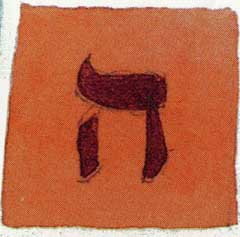
that count for eternity (1 Cor. 15:50-58; Eph. 2:8-10). Hamartiology. The Biblical study of sin. The Greek word for sin is hamartia. Hamartiology focuses on the origin of sin in Genesis 3:1-24, the effect of sin upon the image of God in which man was created, the types of sin of which man is guilty, including imputed sin, inherited sin, and personal sin; and the results of sin, including physical death, spiritual death, and second death. Hapax Legomenon. (pl. Hapax Legomena). A word that occurs only once in the Greek New Testament or in the Hebrew Bible. Occasionally, writers will restrict the scope of a hapax legomenon to one book, say Matthew or Ephesians. Sometimes called, for short, a hapax (pl. hapaxes), a word that occurs only once is difficult to define because words are defined by other uses of the same word in various contexts. When only one noun occurs, a working definition can frequently be built by multiple occurrences of the corresponding verb (or vice versa). Sometimes the etymology of a word can be used to arrive at a definition. In other cases, definitions can only be built by consulting usages in extra-biblical literature. Sometimes a definition can be approximated by consulting Bible translations in other languages. For example, a hapax in the Masoretic Text of the Hebrew Bible can often be aided by consulting the Greek Septuagint translation of the Old Testament (LXX). Here are two examples of hapax legomena in the Greek New Testament with appropriate resolutions. The Greek word theopneustos, an adjective, occurs only once in the New Testament in 2 Timothy 3:16. We can use etymology to determine its meaning. Theos is a noun which means God, and pneustos is an adjectival form from the root of the noun pneuma, which means wind or breath on the one hand, or spirit on the other. Putting the two concepts together, the word means "God-breathed," or "that which God has breathed out." It is impossible to eliminate the overtone of spirit from the word. A fuller translation of theopneustos might be, "God-breathed (by means of His Spirit)." In the same context (2 Tim. 3:16) the noun elegmos appears as a hapax. Its corresponding verb, elegxw, appears seventeen times. The verb is variously translated (in NASB) as "to convict" (5X), "to reprove" (5X), "to expose" (3X), and once each "to show (someone) his fault," to reprimand," "to rebuke," and "to refute." So we can see that "reproof," as translated by the NASB, is an accurate rendering of the word elegmos in 2 Timothy 3:16. He. The fifth letter of the Hebrew alphabet. It has the sound of the English letter "h". By itself, the letter he is pronounced "hay." The he appended at the beginning of a noun serves as the definite article, "the", denoting "the specific" or "the particular" entity. The particular vowel pointing of the he which serves as an article depends on which letter immediately follows. For an example of the use of an article, in Gen. 1:16, we read, "God made the two great lights" (emphasis mine). The article "the" was made by appending the letter "he" at the beginning of the plural noun shenayim (8147), "lights". So the article "he" here denotes the two particular great lights, the sun and the moon. In English "the" is a definite article, while "a" is an indefinite article. There is no Hebrew equivalent of an indefinite article. In English, If I drive "the car," I have in mind the particular car I am thinking of, either known or specified in the context. If I drive "a car," it is indefinite – it could be any car. In Hebrew, nouns by themselves are are considered to be indefinite, so melek (4430), "king" can translate both as "a king" or just plain "king," depending on the context. Immediately below this entry is a pictograph of the letter "he".
Healing, including the Spiritual
Gift of Healing. In the OT, there are a few instances of healing. Abraham prayed for the healing of Abimelech, his wife, and his female slaves. They were healed so they could again bear children (Gen. 20:1-18). After Israelis rebelled and were attacked by venomous snakes, Moses prayed for them and made a model bronze snake. All who looked at the bronze serpent were healed (Num. 21:4-9).Elisha, the OT prophet, through prayer, was able to raise a dead boy back to life (2 Kings 4:32-37). Elisha was also able to heal Naaman, the Syrian captain, who had leprosy, from his loathsome disease by having him bathe in the Jordan River seven times (2 Kings 5:1-19). A dead man was thrown into Elisha's tomb, and contact with Elisha's bones restored the dead man back to life (2 Kings 13:21). King Hezekiah was healed from terminal illness after Isaiah prayed on his behalf (2 Kings 20:1-7; 2 Chron. 32:24-26; Isa. 38:1-8). There are a great many more instances of healing in the NT. Just a few of Jesus' miracles, for example, include His healing a man with an unclean spirit (Luke 4:31-37); His healing a leper (Matt. 8:1-4; Mark 1:40-45; Luke 5:12-16); His raising Jairus' daughter back to life (Matt. 9:18-19; 23-26; Mark 5:22-24; 35-43; Luke 8:41-42; 49-56); His healing blind people (Matt. 20:29-34); His healing of blind Bartimaeus (Mark 10:46-52; Luke 18:35-43); His healing ten lepers (Luke 17:11-19); His raising Lazarus back to life (John 11:1-44). [See a partial list of healing in the Gospels. Note: WordExplain does not subscribe to everything on this website.] There are a number of healings in the book of Acts. Peter healed a lame man at the Beautiful Gate of the Temple (Acts 3:1-10). Peter is singled out as being especially noteworthy among the apostles with signs and wonders. People carried the sick out into the streets so that at least Peter's shadow might fall on any one of them. Among those healed were those who were sick or afflicted with unclean spirits. All were being healed (Acts 5:12-16). When the risen Christ dramatically halted Saul's murderous quest to imprison and kill Christians, Saul was left blind (Acts 9:1-9). At Christ's instructions (Acts 9:10-16), Ananias prayed for Saul to regain his sight. Immediately, he was healed (Acts 9:17-19). Peter healed paralyzed Aeneas in the name of Jesus (Acts 9:32-35). At Lystra, Paul healed a congenitally lame man (Acts 14:8-10). In the town of Lydia, Paul expelled a demon from a fortune-telling slave-girl (Acts 16:16-18). Paul healed Publius' father of recurring fever and dysentery (Acts 28:7-8). Following this, the rest of the people with diseases on the island of Malta were coming to Paul for healing; all were cured (Acts 28:9). Paul refers to the spiritual gift of healing in his letter to the Corinthians (1 Cor. 12:9, 28). There are, however, several places in the NT in which healing did not occur. Among these are Paul's eye affliction (Gal. 4:13-16); Paul left Trophimus ill at Miletus (2 Tim. 4:20); Epaphroditus was ill and almost died (Phil. 2:25-30); Paul advised Timothy to use wine to cure his stomach ailments and other issues (1 Tim. 5:23). James urges the sick person to call the elders of the church to pray for him and anoint him with olive oil in the name of the Lord. The prayer offered in faith will save the sick; the Lord will raise him up, and if he has sinned, he will be forgiven (James 5:14-15). It is uncertain as to whether this anointing with olive oil is a spiritually symbolic anointing or a medicinal anointing.
Without a doubt, the supernatural ability to heal, both in the OT and
in the NT was a "sign" gift designed to make the beholder believe in
the man and his message. The question remains, "Do people today have
the gift of supernatural healing?" Those who believe that this
miraculous gift still occurs today can cite evidence that has convinced
them. Others, I myself included, remain more skeptical.
One of the biggest questions I have centers around Oral Roberts,
who claimed to have had the gift of healing, yet who constructed a
good-sized hospital in Tulsa, Oklahoma in January of 1978. It was
called the "City
of Faith Hospital" and medical school. Sadly, in the wake of
increasing indebtedness, Roberts was forced to close
the hospital and the medical school
beginning in September of 1989. I have a burning question. If one
actually has the gift of healing, why would you ever found a hospital
in the first place? Wouldn't you go around emptying hospitals instead
of building them? Health and Wealth Gospel. The belief that God's plan for all Christians is always to be healthy and wealthy. There is a belief prevailing among certain elements of Christianity that it is God’s will for Christians to enjoy good health and substantial wealth. It is sometimes called "Prosperity Theology." This happy state can only be achieved through faith and obedience. And, sadly, that obedience is often tied to cooperating with the financial appeals of a particular preacher or televangelist. That theology, I believe, represents a failure to interpret Scriptures in light of the recipients to whom they were originally given. Said another way, the “gospel of health and wealth” fails to interpret Scripture dispensationally. While it is true that Israelis were promised blessings of health and wealth if they obeyed God (Deut. 28:1-14); and while it is true that Israelis were promised cursings of deprivation and illness if they disobeyed (Deut. 28:15-68); the same types of promises are not repeated for the New Testament Christian. On the one hand, New Testament Christians are promised spiritual blessings because of their chosen position in the Messiah (Eph. 1:3-4). On the other hand, however, Jesus, in fact, told his followers that in the world, they would experience tribulation (John 16:33). They were to take courage, however, for Jesus has conquered the world. The history of the Jesus himself and that of the Apostle Paul is ample disproof of the credo of "health and wealth." Jesus was so poor He had no place He could even call home (Matt. 8:20; Luke 9:58). The Apostle Paul was beset by imprisonment, beatings, stoning, shipwreck, near drowning, sleeplessness, hunger and thirst, and exposure to cold (2 Cor. 11:23-27). The financial prosperity aspect of this teaching is often related to God's exhortation to Israel to "bring the whole tithe into the storehouse." If they do so, God will "open for you the windows of heaven and pour out for you a blessing until it overflows" (Mal. 3:8-12). What purveyors of this false teaching fail to observe is that this is a promise God made to Israel, not to the Church. The Bible student will look in vain anywhere in the NT epistles for the existence of a Christian "tithe." Rather, principles are given, particularly in 2 Cor. 8:1-9:15. These principles include, among others, (1) following the example of Christ (2 Cor. 8:9); (2) giving in accordance with what one has, not what he does not have (2 Cor. 8:12); (3) administering the collection and distribution of funds with integrity and accountability (2 Cor. 8:18-23); (4) giving bountifully (2 Cor. 9:6); (5) giving purposefully, not grudgingly or under pressure from others (2 Cor. 9:7); and (6) giving cheerfully (2 Cor. 9:7). The reference to "storehouse" (Mal. 3:10) has in mind the storehouses of the Jewish Temple, not the offerings of the New Testament Church, and especially not the coffers of a Television Evangelist! Sadly, televangelists trumpet to gullible viewers that, "If you give to this ministry, God will bless you financially!" While God knows the heart of each individual giver, God does not bless either greed or gullibility. The belief that it is God's will that all Christians be healthy is based on a false appeal to Isaiah 53:5, which states (NKJV), "and by His stripes we are healed" (or "with His stripes we are healed" - KJV). It is a fundamental rule of interpreting Hebrew poetry that the genre rhymes ideas, not sounds. The first part of Isa. 53:5 states, "But He was wounded for our transgressions, he was bruised for our iniquities" (emphases mine). Clearly this predicts that the Messiah would suffer physically for our sins, not primarily for our physical health. Therefore the last part of the same verse -- "the chastisement of our peace was upon Him; and with His stripes we are healed" must refer to peace with God and spiritual healing, not primarily physical healing (1 Pet. 2:24-25). The mantra, "There is healing in the atonement" is true in one sense (Matt. 8:14-17; cf. Isa. 53:4). Ultimately, our future physical health and freedom from death through bodily resurrection throughout eternity as believers (Rev. 21:4) is dependent upon our acceptance of Jesus and His salvation through His atoning sacrifice, accessed through faith in Him. But to insist that God's plan for every believer is to be devoid of sickness and pain in this present life provided he believes enough and obeys enough simply has no basis in Scriptural fact nor in practice. If it did have a basis in reality, surely some deserving soul somewhere would never get sick, never age, and never die! We know that is preposterous, and so is the gospel of health and wealth. Some of the better known proponents of the health and wealth pseudo gospel are Oral Roberts, A. A. Allen, Robert Tilton, Joel Osteen, Kenneth Hagin, and Creflo Dollar. The "Word of Faith" movement shares many of the same views of the "Health and Wealth" Gospel, but should probably be distinguished from it. There are those who have been associated with Oral Roberts University, for example, who are critics of the "Word of Faith" movement. Word of Faith proponents such as Kenneth Hagin and Kenneth Copeland believe that since God spoke the world into existence, Christians have the same power and, through faith, should speak into existence the things they desire. Hagin has taught that, since we humans were created in the image and likeness of God, we are "little gods." To me, the absurdity of the "Health and Wealth" Gospel is best illustrated by Oral Roberts. Roberts claimed to have the gift of healing, yet he prevailed upon his audiences to donate millions of dollars so he could build Oral Roberts University's City of Faith Medical and Research Center. If you have the gift of healing, why on earth would you build a hospital? You ought to be emptying hospitals, not filling them! For an off-site discussion of Prosperity Theology from a historical standpoint, see Wikipedia's article. For a critique of prosperity theology from a more Biblical standpoint, see "Got Questions" article on televangelist scandals. For a discussion of "Word of Faith" from a primarily historical viewpoint, see Wikipedia's article. For a further discussion of the "Word of Faith" movement from a Biblical and theological viewpoint, see "GotQuestions?" article "Word of Faith." See also "GotQuestions?" article on "Name it Claim it." Heaven. The present abode of God and the redeemed of all ages. Here are some things we can deduce about heaven: There is a holy mountain of God in heaven (Ezek. 28: 14, 16). Evidently this holy mountain is the heavenly Mount Zion that exists within heaven (Heb. 12:22; Rev. 14:1). God rules from His throne, evidently located in the temple situated on the heavenly Mount Zion (Psalm 11:4; Isa. 6:1; Rev. 7:15; 16:17). But heaven is not the eternal home either of God or Jesus or of the redeemed. New Jerusalem presently exists within heaven. But it will eventually come down out of heaven to be associated forever with New Earth (Rev. 21:1-4, 10). New Jerusalem will be the eternal abode of Christ and God, the capital of New Earth, which will be redeemed man’s eternal home (Rev. 22:3-5). Hell. The place of fiery, eternal torment for the wicked. There are two terms in the New Testament used to describe hell. One is the word géenna (1067). Géenna is associated with fire (Matt. 5:22; 18:9; Mark 9:43; James 3:6), and even unquenchable fire (Mark 9:43). It is a place into which the whole bodies of wicked people will be cast (Matt. 5:29, 30; 10:28; 18:9; Mark 9:43, 45, 47). It is the place into which both soul and body will be cast (Matt. 10:28). A second term used to describe hell is the "lake of fire," literally, "the lake of the fire" (Rev. 20:14). The word "lake" is límnē (3041), and the word "fire" is pûr (4442). The phrase "lake of fire" is used only in the Book of Revelation (Rev. 19:20; 20:10, 14, 15; 21:8). Three times the term "brimstone," theîon (2303), sulfur, is added to the phrase "lake of fire" (Rev. 19:20; 20:10; 21:8). Once the terms "fire" and "brimstone" are used without the term "lake" (Rev. 14:10). Twice the "lake of fire" is described as "the second death" (Rev. 20:14; 21:8) (see also Rev. 20:6). Evil inhabitants of the "lake of fire and brimstone" include the devil, the beast, and the false prophet (Rev. 19:20; 20:10). Other evil inhabitants include the cowardly, unbelieving, abominable, murderers, immoral persons, sorcerers, idolaters, and all liars (Rev. 21:8). Moreover, anyone whose name was not found written in "the book of life" was thrown into "the lake of fire" (Rev. 21:15). The only way to escape the Lake of Fire is by trusting in Jesus Christ (John 3:16, 18, 36; 5:24; 14:6; 1 John 5:11-13), the Lamb of God who takes away the sins of the world (John 1:29). Those who trust in Jesus have their names written in the Lamb's Book of Life (Rev. 13:8; 21:27). Other references to a fiery place
of eternal torment include Matt. 25:41, 46; Mark 9:48; Jude 1:7. Hermeneutics. A study of the appropriate methods to interpret Scripture. Hebrew poetry, for example, includes synonymous parallelism and antithetical parallelism. Hebrew narrative is typically repetitive. In the letters Paul has written in the New Testament, each prepositional phrase carries significant import. Prophetic literature oftentimes incorporates different symbols. But the symbols represent something literal. One has to distinguish between what is symbolic and what is literal. Dispensationalists use a literal, historical, grammatical, contextual method of interpretation. What the author intended for his original audience is of great import. A given statement cannot be divorced from its surrounding context. Dispensationalists also interpret from a stance of Testamental parity. In other words, promises made by God in the Old Testament to the forefathers of Israel cannot be abrogated by promises made to the Church in the New Testament. Paul urged Timothy, "Be diligent to present yourself approved to God as a workman who does not need to be ashamed, rightly dividing the word of truth" (2 Timothy 2:15, emphasis mine). Every interpreter of the Bible must make it his goal to interpret the Bible correctly. If he misinterprets Scripture, inserting his own ideas or the ideas of some philosophy he espouses, he runs the risk of being disapproved and ashamed when he stands before God. Herod Agrippa I. King of Judea from AD 41 to 55. He was a grandson of Herod the Great and nephew of Herod Antipas. He is the Herod who, in order to harm the early church, had the Apostle James, brother of John, arrested and executed (Acts 12:1-2). When he saw it pleased the Jews, he proceeded to arrest Peter also (Acts 12:3-4). This did not work out well for Herod. God sent a heavenly messenger to release Peter from prison (Acts 12:5-17). The next morning, unable to find Peter, Herod had the poor guards executed (Acts 12:18-19). Thereafter, Herod was giving a speech to the people of Tyre and Sidon, with whom Herod was angry. To appease Herod, the people kept crying out, "Voice of god, and not of man!" Immediately a messenger of the Lord struck him because he did not give God the glory. He was eaten by worms and died (Acts 12:20-23)! Credit for much of this Glossary entry goes to "Got Questions." (Entry added June 28, 2025.) Herod Antipas. The Herod mentioned most often in the New Testament in connection with Jesus' life and ministry. He was born in 21 BC., the son of Herod the Great. In 4 BC, after the death of his father, he inherited part of his father's kingdom. He became tetrarch (ruler over a fourth part) over Galilee (northern Palestine) and Peraea (east of the Jordan River and the Dead Sea). He was tetrarch from 4 BC to 39 AD, roughly approximating the entirety of Jesus' life and ministry.
He
divorced his Nabatean
wife, daughter of Aretas IV, king of the desert kingdom of Nabatea,
in
order to marry Herodias, the wife of his half brother, Philip the
Tetrarch. John
the Baptist drew the ire of Herod Antipas and especially
of Herodias when he criticized Herod for marrying his brother's wife
(Matt. 14:3-5; Mark 6:17-20; Luke 3:19-20). Herod had John
put in prison. Herodias lobbied for his death. To save face, Herod had John
beheaded (Matt. 14:6-12; Mark 6:21-29). Later, when Herod heard
about the many miracles of Jesus, he
surmised that John
the Baptist,
whom he had beheaded, had risen from the dead and was performing the
miracles (Matt. 14:1-2; Mark 6:14-16). Later on, during Jesus' trial, Pontius Pilate heard that Jesus was from Galilee, so he sent Jesus to be tried before Herod Antipas, who happened to be in Jerusalem during that time (Luke 23:6-12). Herod was glad to see Jesus, and began to question him. But Jesus remained silent. Since the chief priests and scribes were accusing Jesus vehemently, Herod treated Jesus with contempt, mocking him by dressing him in a royal robe. He then sent Jesus back to Pilate (Luke 23:8-12). The early church held both Herod and Pontius Pilate responsible for the death of Jesus (Acts 4:27-28). Herod Antipas eventually fell out of favor with Rome and was exiled to Gaul. The King Herod mentioned later in Acts as a persecutor of the church in Jerusalem is his nephew, Herod Agrippa I, who replaced the Roman governor over Judea as King of the Jews, ruling in Jerusalem from AD 41 to 44. Herod the Great. Best known in the NT for his slaughter of male children aged two and under in the town of Bethlehem in his quest to murder the child born "King of the Jews" (Matt. 2:1-18); also for his construction of the huge Israeli Temple in Jerusalem (Matt. 24:1-2). Herod was an Idumean, the son of Antipater the Idumean. His father made him governor of Galilee in 47 BC. Herod was finally successful in conquering Judea from the Hasmoneans in about 37 BC and reigned 33 years as "King of the Jews." Herod possessed a pathological hatred for his rivals. He had his wife's brother Aristobulus drowned in the swimming pool in his palace. He killed 46 members of the Sanhedrin. He murdered his mother-in-law. He had his wife Miramne, a Hasmonean princess, murdered, along with two of their sons. Augustus Caesar reportedly said, "It is better to be one of Herod's dogs than one of his children." Placed in this context, Herod's slaughter of the innocents in Matt. 2:13-18 seems very believable. After a long and excruciating illness, Herod died in 4 BC, and an angel informed Joseph it was safe to return with the child Jesus from Egypt to Israel (Matt. 2:19). See Constable's Table of Herod's Family Tree. Herod Philip II, also known as Herod the Tetrarch:
He was the son of Herod the Great and half-brother of Herod Antipas. He
was also half-brother of Herod Archelaus. Herod Antipas divorced his
first wife to marry Herodias, who had been the wife of his
half-brother, Herod Philip II. As Tetrarch, Herod Philip II ruled over
the northeast part of his father's kingdom between 4 BC and A.D. 34.
Luke listed these territories as Iturea and Trachonitis (Luke 3:1). Heterodoxy: The belief in and practice of that which does not conform to sound Biblical doctrine (1 Tim. 4:6; 6:3; 2 Tim. 4:3; Tit. 1:9; 2:1). Orthodoxy is that which is correct Biblical doctrine. Heterodoxy is belief in and adherence to that which is not orthodox. Heterodoxy is incorrect interpretation of the Bible. In all honesty, there are probably degrees of heterodoxy. For example, what a Roman Catholic defines as heterodox will be different than what a Protestant defines as heterodox. But if the Scriptures are the standard, and they are, then both cannot be correct in their labeling. By definition, "antichrists" who depart from the faith of the Apostles and the Apostolic Community cannot be orthodox. They are heterodox (1 John 2:18-19). He who denies that Jesus is the Messiah is heterodox (1 John 2:20-23). Jude, the half brother of Jesus, urged his readers to "contend earnestly for the faith which was once for all handed down to the saints" (Jude 1:3). Hifil, Hiphil. The stem of the Hebrew verb that usually indicates a causative meaning for a Qal verb. An example is with the verb bo (935), "go, come." For example, in Zeph. 2:2, the Qal stem of bo appears twice in the Imperfect tense, "Before the burning anger of the LORD comes upon you, before the day of the LORD'S anger comes upon you." The same verb, bo, appears once in the Hifil stem with the Imperfect tense in Zeph. 3:20, "At that time I will bring you in ...." One can sense the causative meaning. In a woodenly literal sense, it could be translated, "At that time I will cause you to come in." The Qal stem in the same verse would be translated, "I will come in." Sometimes Hifil is spelled Hiphil in English. See the following site for a basic introduction to Hebrew verbs. High Priest.
The most important priest, who alone entered the Holy of Holies
once a
year on the Day
of Atonement (Lev. 16:1-34) to apply blood from the appropriate
sacrifice between the cherubim on
top of the Ark of
the Covenant. Aaron
was the first High Priest (Exod. 28:1-39). The term "High Priest" is
used in the OT
in Lev 21:10; Num 35:25; Num 35:28; Josh 20:6; 2 Kings 22:4; 2 Kings
22:8; 2 Kings 23:4; Haggai 1:1; Haggai 1:12; Haggai 1:14;Haggai 2:2;
Haggai 2:4; Zech 3:1; Zech 3:8; Zech 6:11; Neh 3:1; Neh 3:20; Neh
13:28; 2Chron 34:9. The term consists of a combination of the noun for
"priest," kôhên (3548)
and the adjective gâdôl (1419),
meaning "great" in importance. The term "High Priest" is used
much more frequently in the NT, e.g.,
Matt. 26:3, 63; Mark 14:47, 61; Luke 3:2; John 11:49; 18:13; Acts 4:6;
5:27; 23:2; 24:1. It comes from a single noun, archiereús (749). In
the singular it is translated "high priest;" in the plural, "chief
priests." The ultimate High Priest is none other than Jesus Christ
(Heb. 2:17; 3:1; 4:14, 15; 5:5, 10; 6:20; 7:26; 8:1; 9:11), a priest
forever after the order of Melchizedek
(Psa. 110:4; Heb. 5:6, 10; 6:20; 7:17) Historic Premillennialism. See Premillennialism, Historic under Premillennialism. Technically, the theological position should be called "Historical Premillennialism." Essentially the view is that there is a literal millennium, and that the Rapture takes place prior to the Millennium, but that the church, under this view, must go through the Tribulation. It can be demonstrated that certain Church Fathers held to this view. But in fact, historically, it can be demonstrated from the Scriptures that Paul, for example, believed in a Pre-Tribulation Rapture as well as in a subsequent literal, defined Tribulation, and in the literal Millennial Kingdom of Christ, though he never ascribed to it a specific length of time as did the Apostle John, the only author in the entire corpus of Scripture who does so. Hithpael. The Hebrew verb stem "used to express an intensive type of action with a reflexive voice." In general, it can be said that "the Hithpael stem is related to the Piel stem formation, and it generally expresses the reflexive voice of the meaning of a verb in the Piel stem." However, this stem is quite flexible in use, "and can express other kinds of verbal action, depending on the context and the specific verb." For example, the Hithpael can appear as an Imperative, Infinitive Construct, or Infinitive Absolute. Hodges, Zane C. (1932-2008) A professor of Greek at Dallas Theological Seminary (1959-1986), he pastored the Victor Street Bible Chapel for almost fifty years. In 1982, along with Arthur L. Farstad, Hodges published an edition of The Greek New Testament According to the Majority Text with Apparatus. This is an edition of the Byzantine Text type, the so-called "Majority Text." The King James Version is based on an edited version of the Majority Text. Hodges is perhaps best known for his ongoing duel over several years with John MacArthur on the nature of the Gospel. This was known in certain circles as the "Lordship salvation controversy." Hodges held to "free grace" - that all a person had to do to be saved was to place his trust in Jesus Christ. He believed that submission to the Lordship of Christ was to be identified with the ongoing sanctification process. I agree wholeheartedly with Hodges. I also agree with MacArthur (and the NT author James), that a biblical faith will result in works (James 2:14-26). Several of Hodges' books that fall into the category of his dispute with MacArthur include The Gospel Under Siege: A Study on Faith and Works (1981; 2nd edition, 1992); Grace in Eclipse: A Study on Eternal Rewards (1985); Absolutely Free! A Biblical Reply to Lordship Salvation (1989; 2nd edition, 2014); and The Gospel Under Siege: Faith and Works in Tension (1992). For the purposes of this Glossary entry, Hodges is most noted for his commentary on 1 John which appeared in The Bible Knowledge Commentary, a 2 Volume Commentary on the Old and New Testaments written by Dallas Theological Seminary professors. Holy
Spirit. The third Person
of the Triune God. There are three persons in Scripture acknowledged to
be God. The Father is God; Jesus Christ is God; the Holy Spirit is God.
Each of these three is a person, yet they each partake of the same
essence - God. There are not three Gods, but one. Here is a brief list
of the works of the Holy Spirit. The Holy Spirit (1)
was active in creation
(Gen.
1:2);
(2) was the Divine agent of the inspiration of Scripture (2 Sam. 23:2; John 14:26; Acts 1:16; 2 Pet. 1:21); (3) was and is active in restraining sin in the world (Gen. 6:3; 2 Thess. 2:7-8); (4) along with the Bride of Christ, is constantly inviting people all over the world to salvation through Christ (Rev. 22:17); (5) is active in regeneration, i.e., giving new birth / new life to believers in Christ (Ezek. 36:25-27; John 3:5-8); (6) leads believers, also called "the sons of God" in the paths of righteousness "for His name's sake" (Rom. 8:14; cf. Psa. 23:3); (7) adopts us believers into the family of God (Rom. 8:15); (8) serves as One who, in the NT, and in the physical absence of Jesus Christ, calls out alongside a believer to warn, motivate, and comfort (John 14:16-17); (9) dwells within every believer (Rom. 8:9; 1 Cor. 6:19; 12:13); (10) permanently seals each believer (2 Cor. 1:22; Eph. 1:13-14); (11) baptizes each believer into the Body of Christ (Acts 1:5; 1 Cor. 12:13); (12) gives each believer in Christ a spiritual gift or gifts (1 Cor. 12:7-11); (13) was given to us believers so that we may know the things freely given to us by God (1 Cor. 2:12) (14) each believer is commanded to be filled with, and thus controlled by the Holy Spirit (Eph. 5:18). (15) the presence and activity of the Holy Spirit within the life of the believer is evidenced by the 9-fold fruit of the Spirit: love, joy, peace, longsuffering, kindness, goodness, faithfulness, meekness, self-control. Against such qualities there is no law (Gal. 5:22-23); (16) fervently intercedes for us believers according to the will of God (Rom. 8:26-27); (17) will one day quicken (make alive) the mortal bodies of us believers (Rom. 8:11); (This information adapted from Paul P. Enns, Moody Handbook of Theology, Chapter 21, Pneumatology: Doctrine of the Holy Spirit.) I (JTB) have begun adding additional data as of April 4, 2023 Holy Spirit, Baptism of. The Bible teaches that those who believe in Jesus are united with Him in His death, burial, and resurrection (Romans 6:3-5; Galatians 2:20; Colossians 2:12-13; 3:1-4). The mechanism by which this happens is the baptism by means of the Spirit (Matthew 3:11; Mark 1:8; Luke 3:16; John 1:33; 1 Corinthians 12:13), in which Jesus uses the Holy Spirit to place believers into the Body of Christ. The immersion process in water baptism pictures the uniting of the believer with Jesus in His death, burial, and resurrection. But it is only Spirit baptism that has sufficient power to unite believers with Christ (1 Cor. 12:13). Water baptism can never do that. Similarly, in John’s baptism, water had no power to make the adherents repentant. Those who repented came to be baptized (Matt. 3:1-6), but some who came to be baptized were NOT repentant (Matt. 3:7-10). John the Baptist freely acknowledged that Jesus’ baptism by means of the Spirit was far superior to his own water baptism signifying repentance (Matt. 3:11-12). See also Baptism, Spirit. See also "Is speaking in tongues a necessary sign of the Baptism of the Spirit?" See also "Four Different Types of Baptism." See also "Which Christians are Baptized with the Holy Spirit?" Holy Spirit, Filled with. Individual believers in the Church Age are commanded to be filled with or controlled by the Holy Spirit in their personal lives. The primary passage is Ephesians 5:18, "And do not get drunk with wine, for that is dissipation, but be filled with the Spirit." Christians are forbidden to be controlled by spirits, but are commanded to be controlled by the Holy Spirit. "Be filled" is the 2nd Person Plural Present Passive Imperative of the verb plēróō (4137), "to fill to the top: so that nothing shall be wanting to full measure, to fill to the brim" (excerpted from OBU). The idea is that, just as wine controls one who is drunk because he is filled with wine, just so the believer is commanded to let the Holy Spirit fill him completely so that he is completely under the control of the Holy Spirit. What will that look like? The immediate context provides some answers: (1) Those who are filled with the Spirit will be speaking to one another in psalms, hymns, and spiritual songs, singing and making melody in their hearts to the Lord (Eph. 5:19); (2) they will be thanking God for all things in the name of Christ; (3) they will be subjecting themselves to one another in the fear of Christ. This includes a) wives submitting to their husbands as to Christ (Eph. 5:22-24); b) husbands loving their wives as Christ does the Church (Eph. 5:25-30); c) children obeying their parents in the Lord (Eph. 6:1-3); d) fathers not exasperating their children (Eph. 6:4); e) slaves submitting to their masters as to Christ (Eph. 6:5-8); f) masters treating their slaves respectfully, knowing that one day they will have to give an account to their Master in heaven, with whom there is no partiality (Eph. 5:9). It is also accurate to say that those who are filled with the Spirit will exhibit the fruit of the Spirit, identified as love, joy, peace, patience, kindness, goodness, faithfulness, gentleness, and self-control (Gal. 5:22-23).
It also is accurate to say that those who are filled with the Spirit
will exhibit His control in their ministry (Acts 2:4; 4:8, 31; 9:17;
13:9). Hope.
Anticipation, expectation of a beneficial and rewarding outcome. The OT
word is tiqvâh (8615).
The hope of the righteous is to be found only in God (Psa. 62:5;
71:5; Jer. 29:11; 31:17). The hope of the wicked will perish (Prov.
10:28) when he dies (Prov. 11:7). Though the wicked hope for a good
outcome, ultimately, their hope will turn to wrath (Prov. 11:23). A
less frequently used word in the OT
is tôcheleth (8431)
(Psa. 39:7; Prov. 10:28; 13:12). The NT word is elpís (1680), frequently, "hope ... (3) as expectation of a divinely provided future (the) hope (Col. 1:27)" (excerpted from Friberg). Some observations can be made as to the use of this term. (1) In relation to the nation of Israel, there exists "the hope of Israel" (Acts 28:20); and there is "the hope of the promise made by God to our fathers" (Acts 26:6). in relation to the NT believer: (2) Our hope has a Divine basis – it rests in God (Acts 24:15), and in Jesus Christ (1 Thess. 1:3; 1 Tim. 1:1). (3) Hope exists in relation to glory: Christians "exult in hope of the glory of God" (Rom. 5:2); "Christ in you (Gentles), the hope of glory (Col. 1:27); Christians are constantly to be anticipating "the blessed hope and the appearing of the glory of our great God and Savior, Christ Jesus" (Tit. 2:13). (4) In relation to salvation there exists "the hope of the gospel" (Col. 1:23); "the hope of salvation" (1 Thess. 5:8); and "the hope of His calling" (Eph. 1:18; 4:4). (5) For the believer there exists "the hope of righteousness" (Gal. 5:5). (6) In the future, Christians anticipate "the hope and resurrection of the dead" (Acts 23:6). Christians live "in the hope of eternal life" (Tit. 1:2; 3:7). By way of contrast, unbelievers "have no hope" (1 Thess. 4:13). (7) Finally, Paul spoke of three abiding verities in the Christian faith: "But now faith, hope, love abide – these three; but the greatest of these is love" (1 Cor. 13:13). House of Israel. The whole nation of Israel.
The Hebrew noun bayith (1004),
frequently refers to a physical structure in which people live, a
dwelling. But when it is used in conjunction with a name, it has to do
with the physical descendants of that person. For example, the phrase
"house of Eli" (1 Sam. 3:14) refers to the physical descendants of Eli.
The "house of David" and the "house of Saul" (2 Sam. 3:1, 6)
refers primarily to the physical descendants of David and Saul. This
can be demonstrated in that 2 Sam. 3:2-7 describe the various sons of
David born to his different wives and the concubine of Saul. We read of
the "house of Jeroboam" (1 Kings 14:10) that refers to Jeroboam's
descendants. So the term "house of Israel" refers to the physical
descendants of Israel. Israel was a later name for Jacob, so the phrase
"house of Jacob" is essentially the same as "house of Israel." The
phrase "sons
of Israel"
is frequently a synonym for "house of Israel" and "house of Jacob" (Ex.
19:3-4). The phrase "house of Israel" is used 145 times in the NASB95.
Far and away the most frequent usage is to be found in the book of
Ezekiel, where it appears 78 times. The next most frequent usage is in
Jeremiah, a mere 19 times. For an exposé of the House of Jacob Bible
Study Class, see this off-site article, "What
is the House of Jacob?" |
|